PreMiEr Summit 2026 Explores Microbiome Research for Healthier Buildings
Researchers, industry partners, government and nonprofit leaders gathered to explore how indoor microbiome research can guide decisions about healthier buildings.
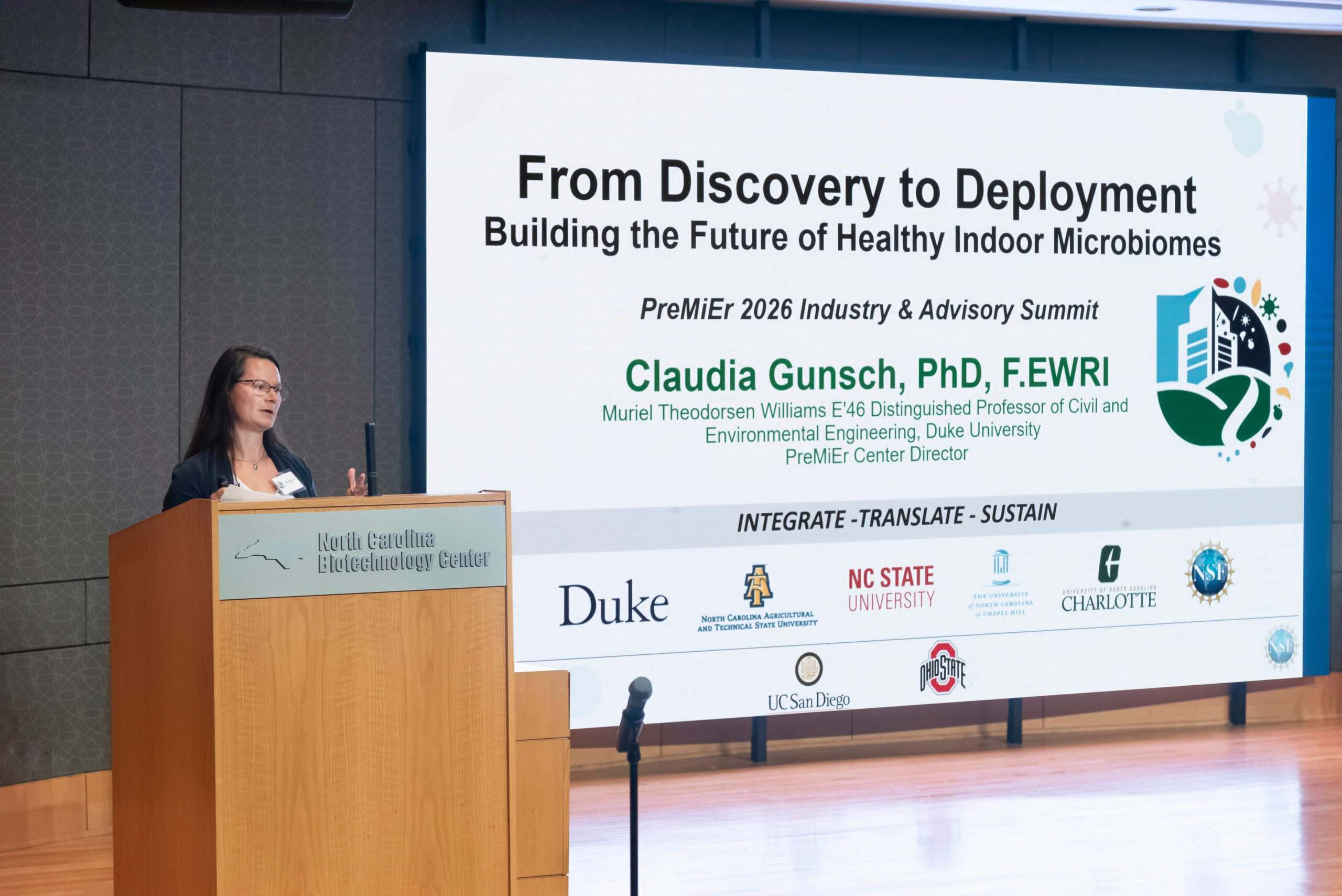
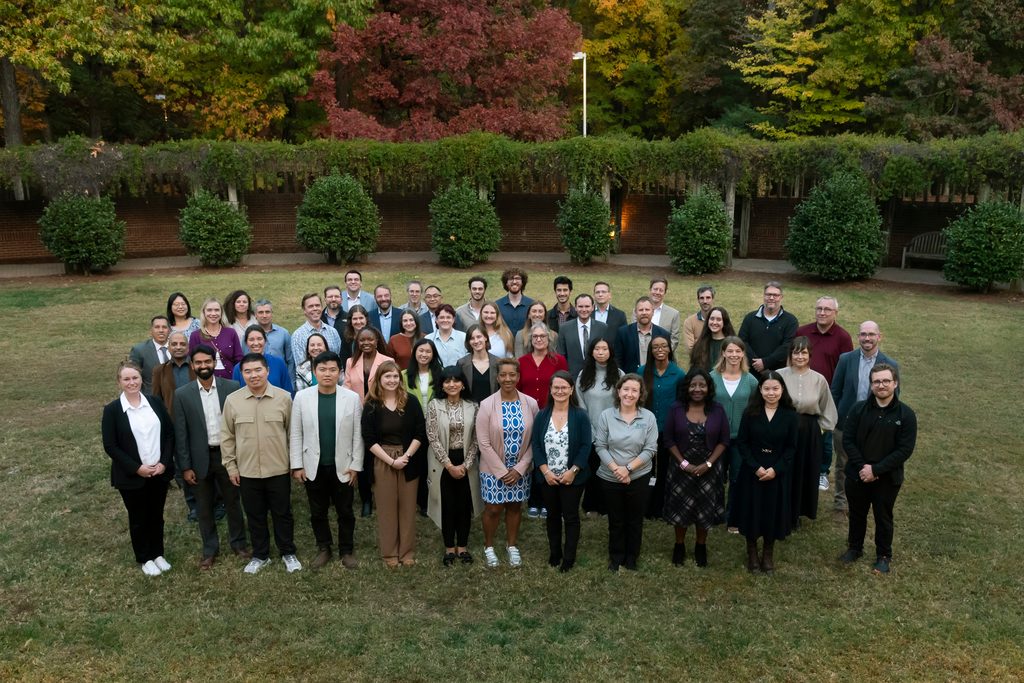
At the 2026 PreMiEr Industry and Advisory Summit, 90 participants from academia, industry, government and nonprofit organizations examined how research on indoor microbes could guide decisions about healthier buildings. The summit was held November 4 and 5 at the NC Biotechnology Center in Research Triangle Park, North Carolina, around the theme “Road to Deployment.”
Buildings contain communities of bacteria, fungi and other microorganisms, collectively known as the indoor microbiome. Understanding how those communities affect people, and how to manage them responsibly, is the focus of PreMiEr, the National Science Foundation Engineering Research Center for Precision Microbiome Engineering.
Summit at a Glance
- Sensing microbes outside the laboratory
- Turning measurements into decisions
- Defining a healthy indoor microbiome
- Designing interventions for responsible use
- Testing ideas against customer needs
A Vision for What Comes Next
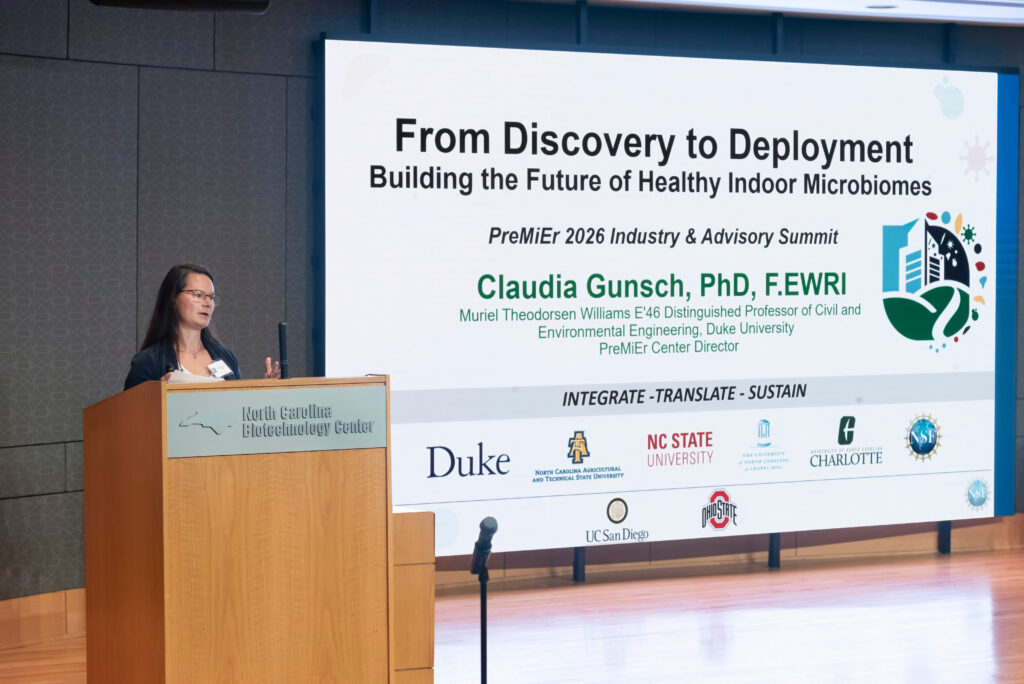
Following welcome remarks from Duke Pratt School of Engineering Dean Jerome P. Lynch, PreMiEr Director Claudia Gunsch outlined the center’s next phase. Central to that vision is MoBEStat, a framework connecting microbial measurements with models and interventions, followed by further measurements to assess what changed.
Sensing Microbes Outside the Laboratory
The opening session, led by UNC Chapel Hill doctoral candidate Lindsay Saber, explored technologies for detecting microbes in buildings. Lightning talks from students covered rapid genetic tests and sensors that detect chemical signatures associated with fungi.
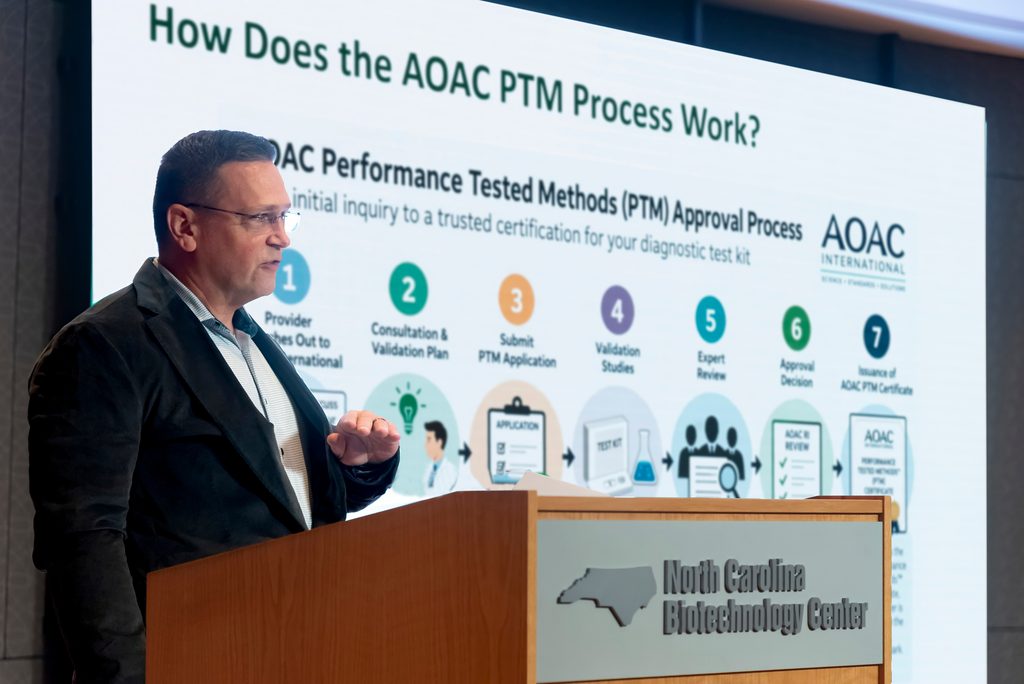
Duke’s Boyuan Chen described work in 13 North Carolina homes, where mVOC sensor readings were validated with established sampling and laboratory methods. Neogen’s Jesse Miller connected those advances to product development, describing how customer needs and independent validation shape a detection technology’s path to use.
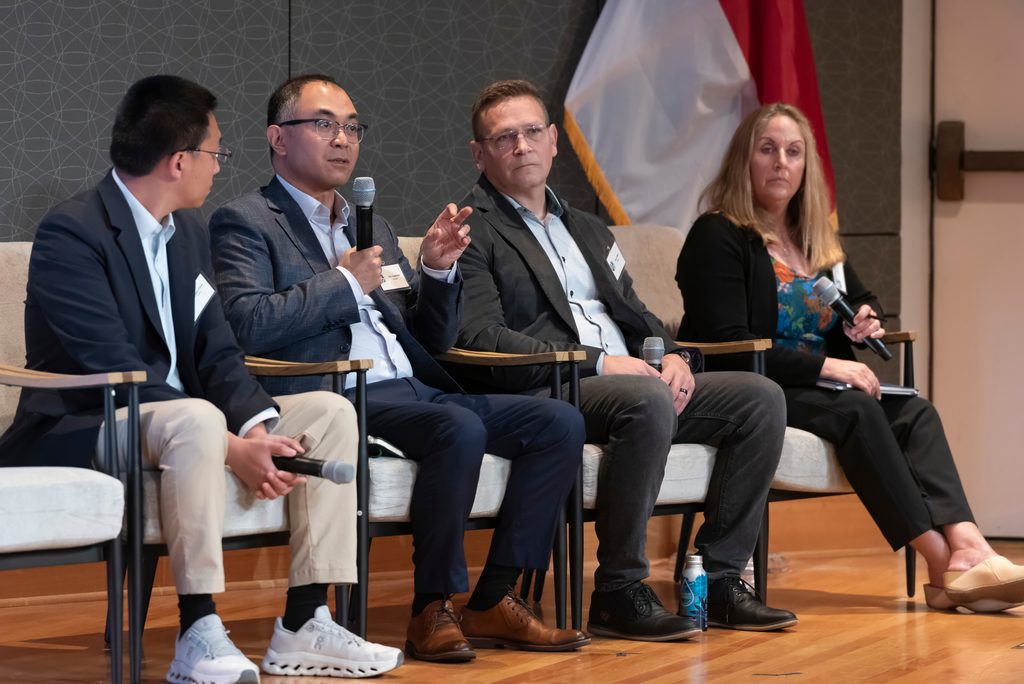
In a panel moderated by Rachel Noble, Miller, Chen and Neogen’s Eric Agdeppa discussed the promise and limits of indirect signals. Agdeppa stressed connecting a surrogate measurement to the underlying biology and designing tools around users’ workflows. The panel also considered data privacy and the cost of making sensing accessible across building types.
“If you can use proxies, get those ground truth samples.”
Jesse Miller, Neogen
Turning Measurements into Decisions
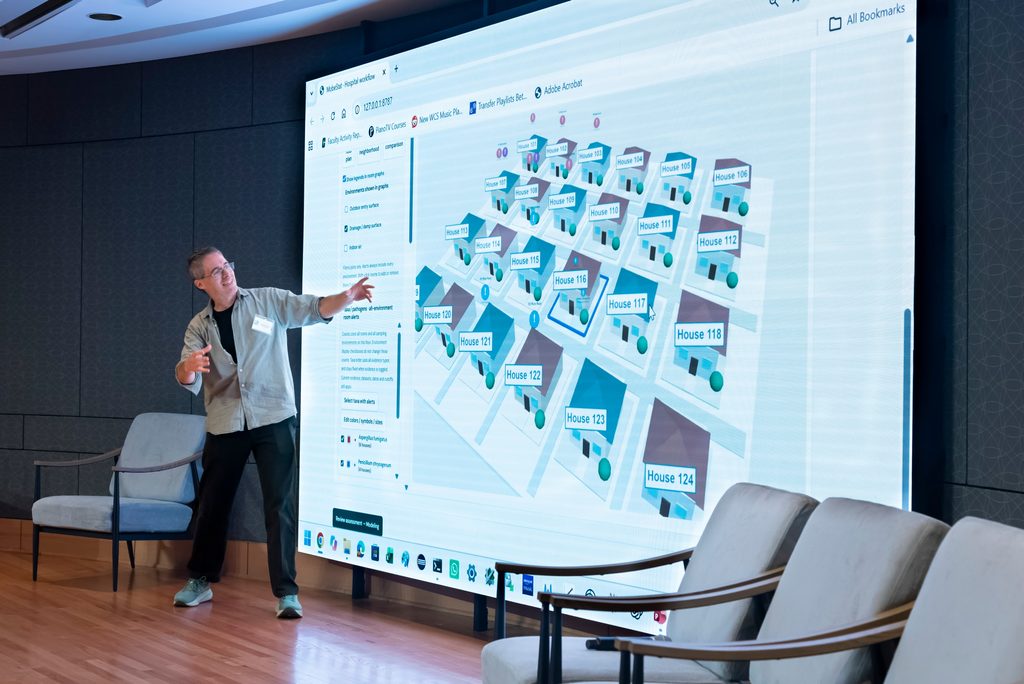
A modeling session led by UNC Chapel Hill postdoctoral researcher Clara Eichler examined how environmental data can inform responses. UNC Charlotte’s Anthony Fodor demonstrated a MoBEStat software prototype, using simulated data to show how measurements, models and possible interventions could connect within a shared interface.
In a keynote, Bobby Warren, director of Duke’s DiRTE Lab, brought a hospital perspective to the gap between detection and action. His framework asked three questions: what was detected, whether it was alive and able to reach a patient, and what evidence connected it to patient harm.
“A small-scale version of the large-scale study you would do.”
Bobby Warren, Duke DiRTE Lab, on why pilots in occupied settings matter
In the panel that followed, UNC Chapel Hill’s Megan Lott described models that trace microbial movement and estimate infection risk, while noting gaps in evidence linking exposure to infection. Thomas Sharpton of Oregon State University emphasized testing whether a model built in one setting works in another. Jordan Zambrana of the U.S. Environmental Protection Agency outlined how indoor air chemistry modeling could complement microbiome research.
Defining a Healthy Indoor Microbiome
An afternoon forum took on a question underlying the entire summit: what should a healthy indoor microbiome look like? Gunsch and PreMiEr Deputy Director Joe Brown shared a proposed framework built on three ideas:
- Controlling pathogen risk
- Recognizing that occupied spaces are not sterile
- Supporting diverse microbial communities that stay resilient when conditions change
“Any engineering application really requires an endpoint that you can measure.”
Joe Brown, PreMiEr Deputy Director
Gunsch also highlighted research on microbiome stewardship, coauthored by PreMiEr’s Jennifer Kuzma, on how building operations and occupant practices can support beneficial microbes while managing pathogen risk.
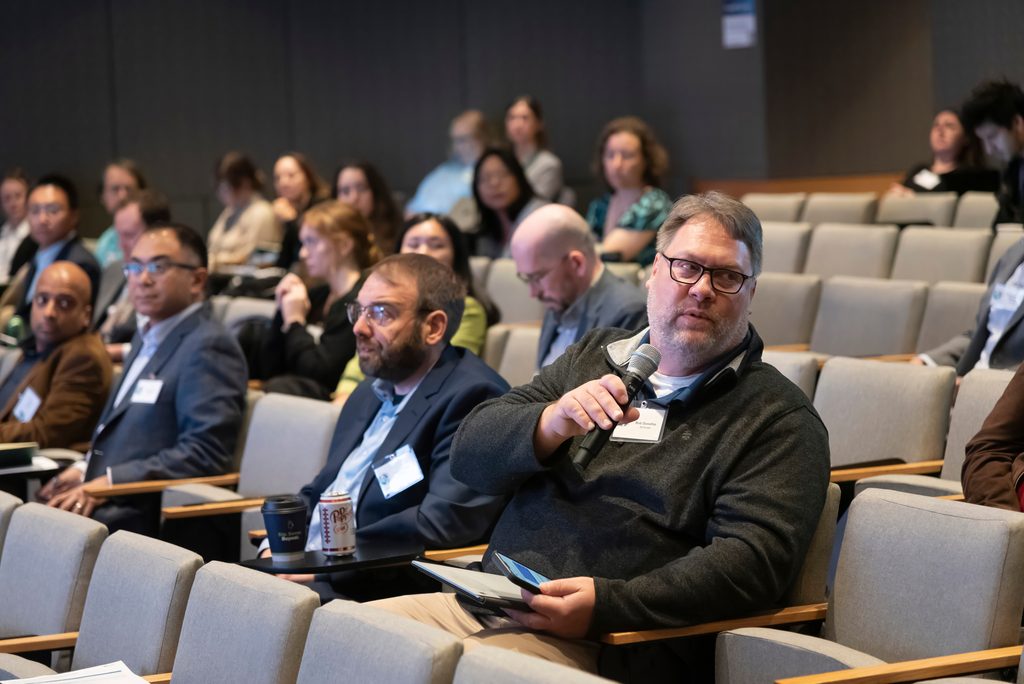
Health goals depend on the setting. Duke infectious disease physician Deverick Anderson pointed to hospital sinks and nearby surfaces as a starting point for evaluating interventions. Duke’s John Rawls emphasized benchmarking ecological approaches against standard practice. Arizona State University’s Rosa Krajmalnik-Brown urged attention to what microbial communities actually do, and Rob Donofrio of BioScope Innovations stressed the difference between detecting microbial DNA and proving living organisms are present.
Designing Interventions for Responsible Use
Day two turned to approaches for modifying indoor microbiomes. Nathan Crook of NC State University and Ophelia Venturelli of Duke framed research on microbial communities designed to limit pathogens. Lightning talks ranged from engineered communities in sink plumbing to viruses that target bacteria, along with biological safeguards to control microbial activity.
In her keynote, Whitney Austin Gray of the International WELL Building Institute explored routes for turning evidence into building practice, and proposed continuing education to help building professionals understand microbiome science.
“Making it accessible and listening to what they have to do at scale.”
Whitney Austin Gray, International WELL Building Institute
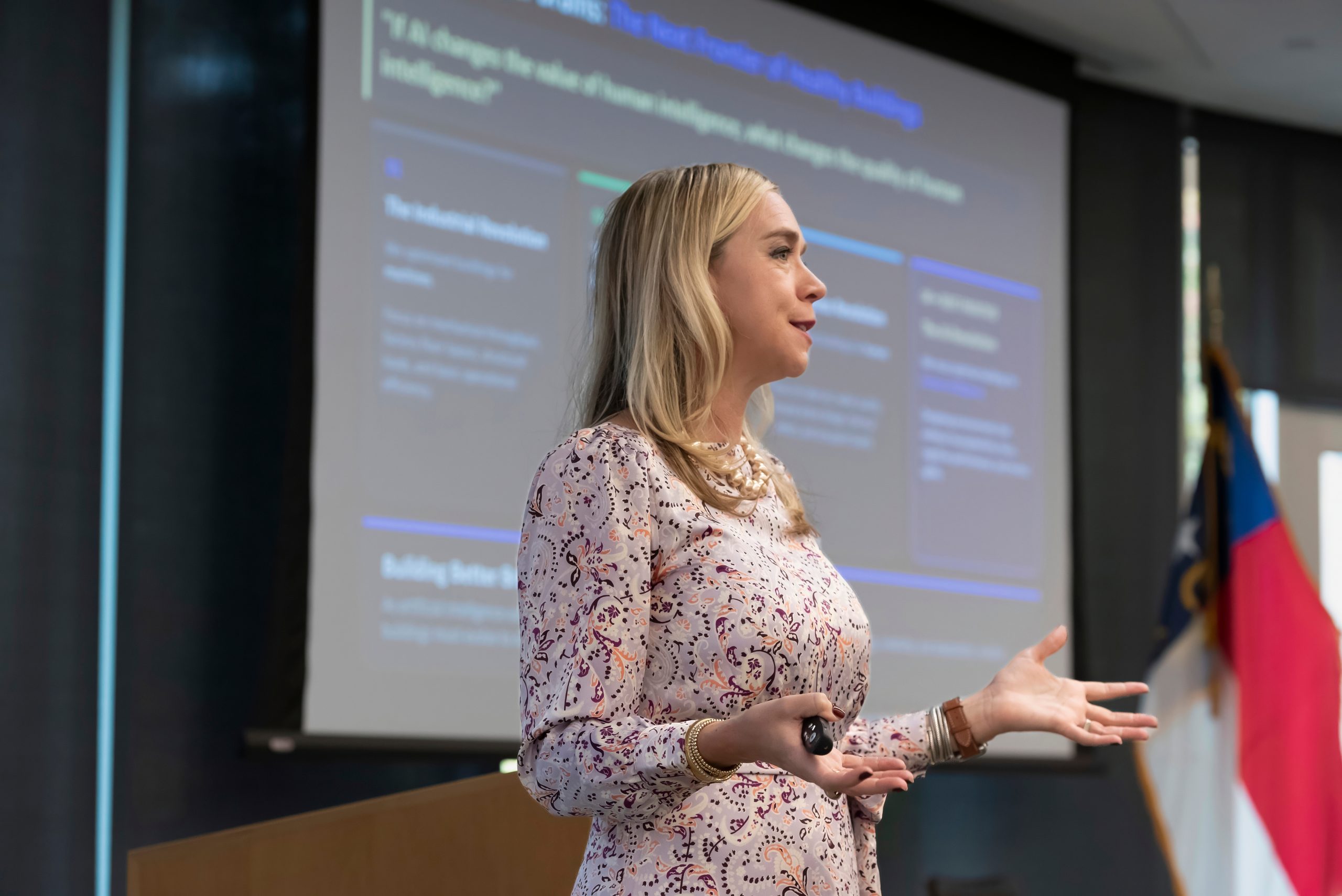
In the panel moderated by Crook, Leah Blasiak of Novonesis emphasized safety and product quality as foundations for trust, along with early field testing. Frank Paretti of PS&S focused on adoption: tools facility teams can use, and the building codes and approval processes that shape implementation.
NC State University’s Jennifer Kuzma highlighted the need for people to have a voice in decisions affecting their spaces. Drawing on interviews with intensive care nurses, she stressed fitting technologies into existing workflows.
Participant Highlights
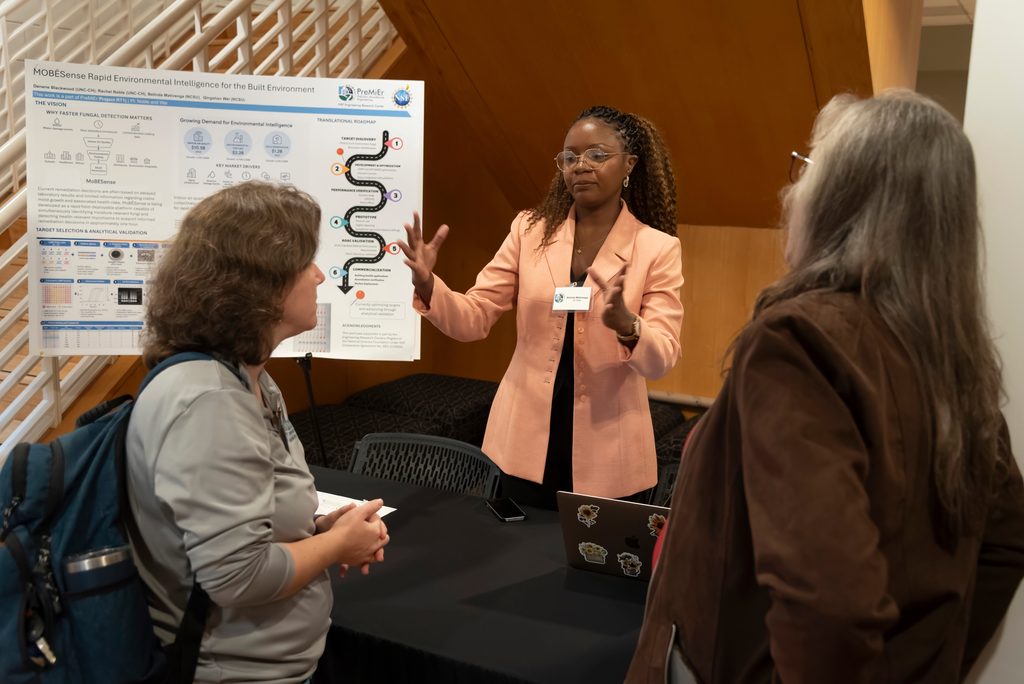
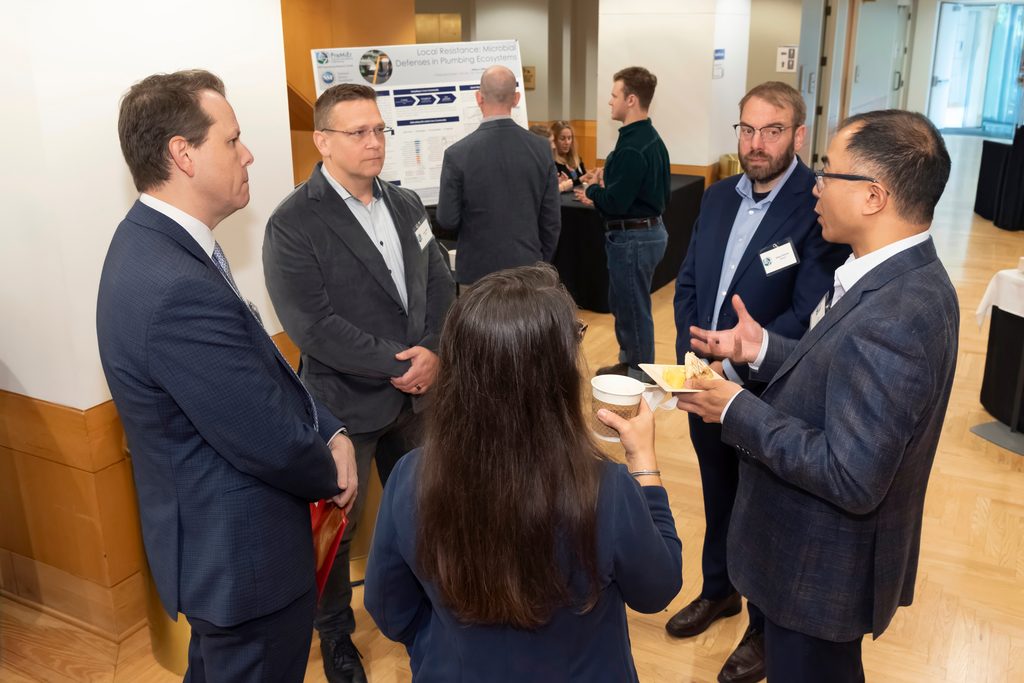
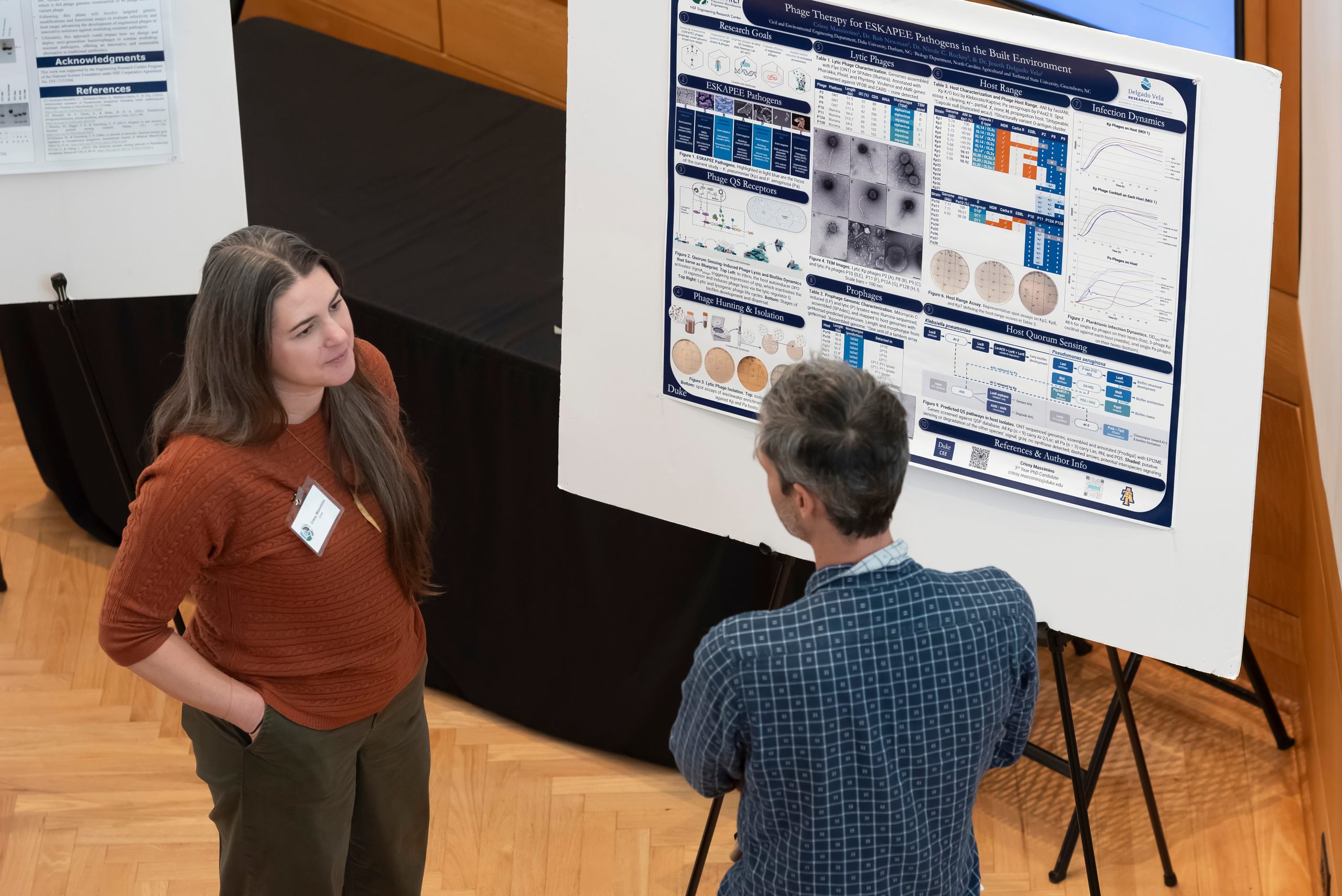
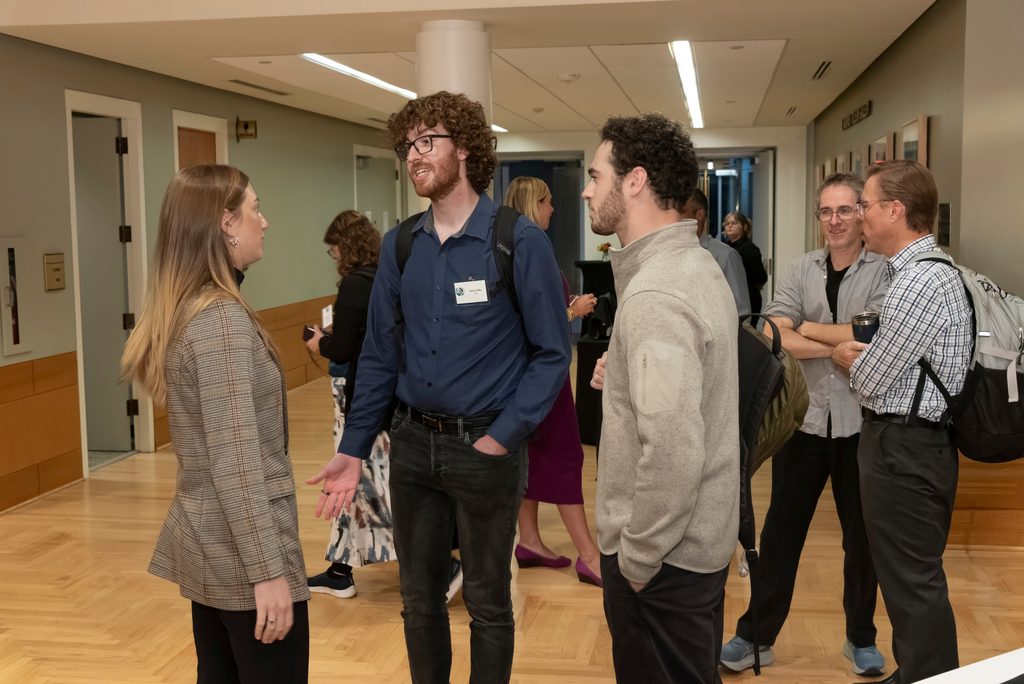
Graduate students and postdoctoral researchers helped lead the summit’s scientific discussions. Lightning talks, posters and technology demos let participants explore the work directly with its developers, from fungal sensing and environmental detection assays to exposure models and tools for engineering microbial communities. Conversations during breaks and the partnership reception connected research questions with partners’ concerns about validation, cost and usability.
Testing Ideas Against Customer Needs
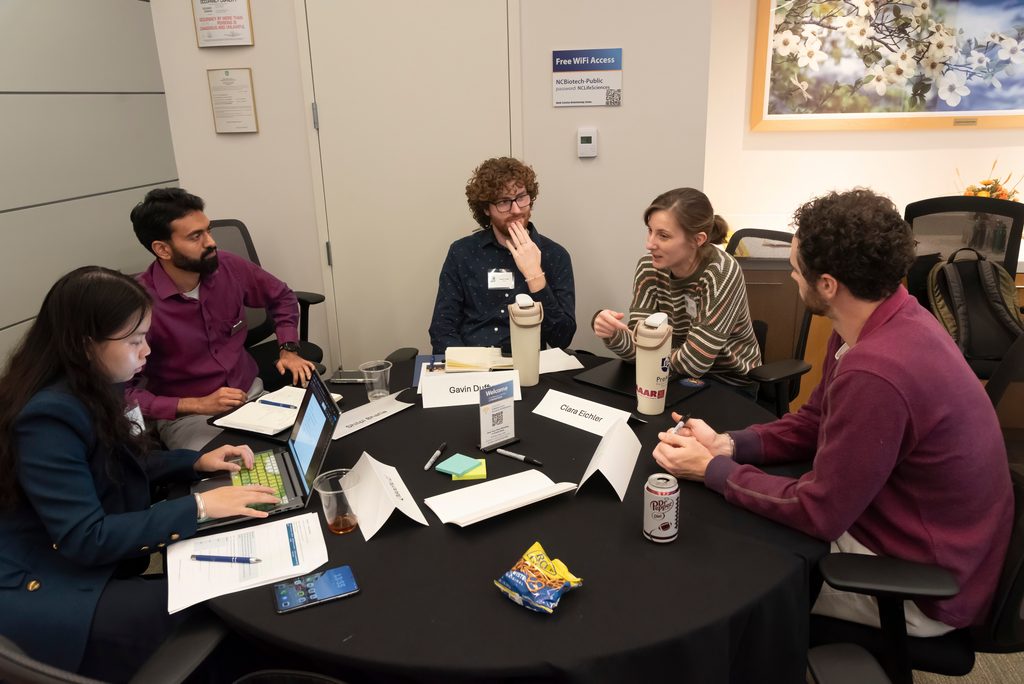
The final workshop, led by Rob Donofrio and Duke doctoral candidate Will Stiffler, applied customer discovery methods to three technology cases:
- Automated sensing of microbial chemical signatures
- Microbial formulations intended to limit pathogens
- Environmental monitoring with Petrifilm RYM
Participants considered who each technology would serve, how those users address the problem today and which stakeholders to interview next. The exercise connected scientific possibilities with questions about purchasing, implementation and value, supporting the summit’s broader focus on partnerships that could help sustain PreMiEr beyond NSF funding.
Thank You
We are grateful to our Advisory Boards and external partners for their active participation and for helping shape PreMiEr’s research direction.