
Advancing Healthier Buildings Through Microbiome Innovation
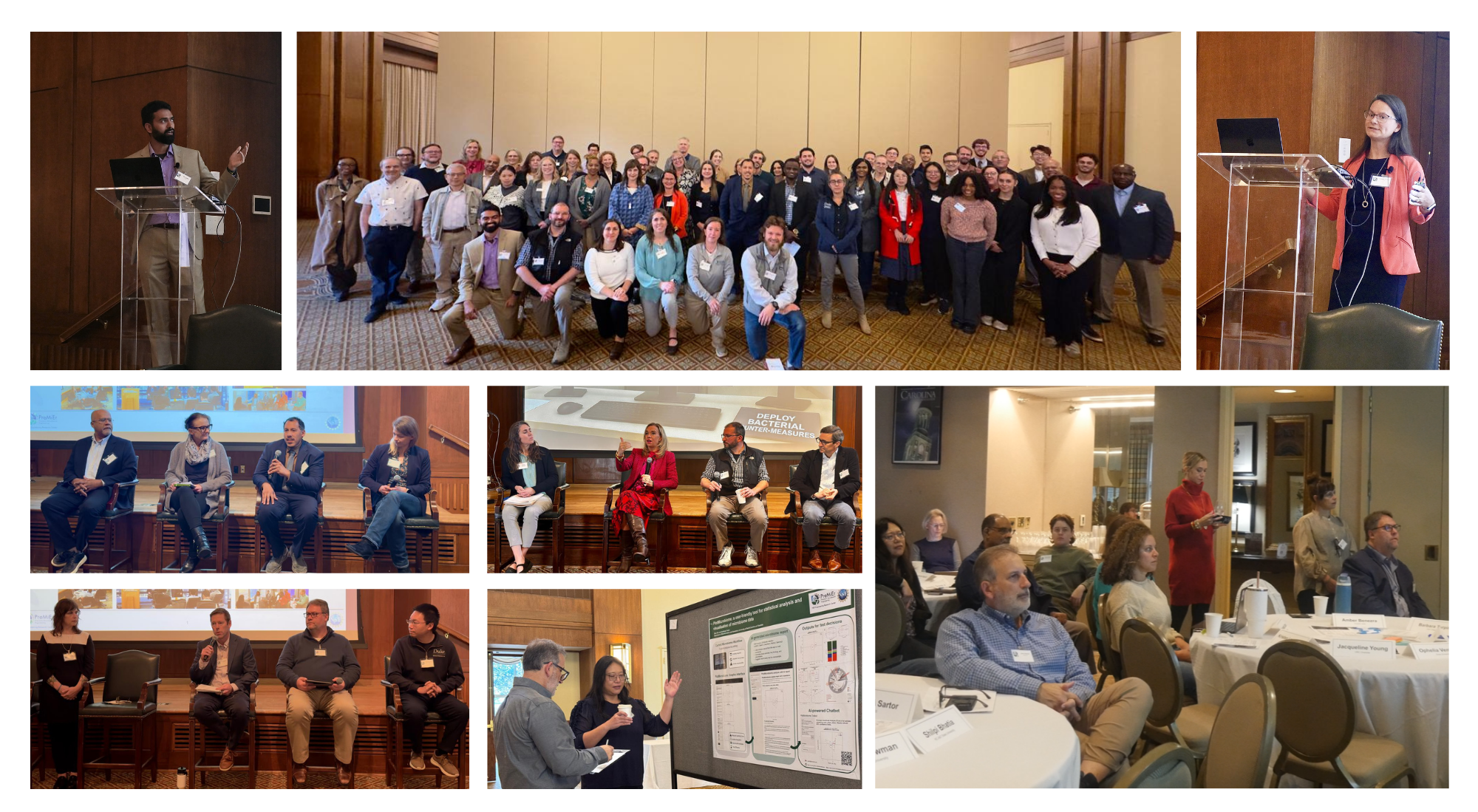
On November 20–21, 2025, PreMiEr convened more than 80 participants from 9 academic institutions and 13 external organizations for its annual Industry & Advisory Summit in Chapel Hill, NC. The two-day event brought together scientists, engineers, industry leaders, government partners, and non-profit organizations to advance one shared mission: shaping the future of healthier indoor environments through microbiome engineering.
Across sessions and workshops, the summit highlighted major strides in the field and the growing momentum to translate research into practical solutions that improve health, safety, and building performance.
Turning Vision Into Practical Solutions
PreMiEr leadership opened the summit by outlining the center’s progress and expanding national role in defining healthier building standards. The program quickly transitioned into demonstrations and technical discussions on microbial sensing, early-warning technologies, and analytical tools designed to support better decision-making in built environments.
During the session on sensing technologies, Duke roboticist Boyuan Chen emphasized the need for accessible early-warning systems, noting:
| “What’s really missing is something that can give people early signals—enough time to prepare and respond.”
Industry experts added context around practical implementation challenges. Rob Donofrio highlighted that while sensitivity in environmental diagnostics has advanced considerably, speed remains the limiting factor. The biggest bottleneck, he noted, is the ability to move from sample to answer quickly enough to be operationally meaningful in buildings.
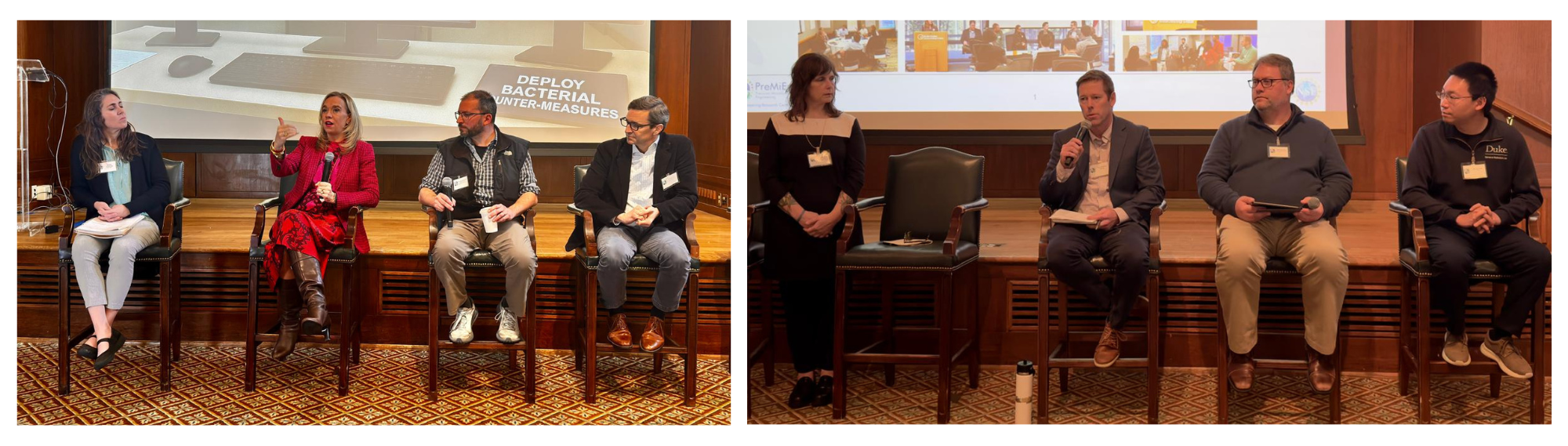
In the discussion on “healthy building dashboards”, Whitney Austin Gray of the International WELL Building Institute stressed the importance of tools that people can understand, trust, and act upon. As she explained:
| “Between biology & psychology lies behavior. A dashboard only works if people know what to do with the information.”
Her perspective reinforced the broader theme that microbiome-informed tools must support clear decision-making, not add complexity or uncertainty.
Building Partnerships That Drives Changes
Collaboration emerged as one of the summit’s strongest throughlines. Industry partners underscored that meaningful progress depends on early communication and alignment between academia, industry, and government—especially in a field where microbial risks are not always visible to the public and established standards are still evolving.
Equity also took center stage in conversations about implementation. Anthropologist Amber Benezra reminded attendees that scientific advancement must lead to accessible solutions, noting:
| “If people can’t fix mold in their homes, or afford these technologies, the science alone won’t solve the problem.”
Her message underscored a broader takeaway: microbiome innovation must meet communities where they are and address real-world constraints.
Making Microbiome Science Meaningful For People
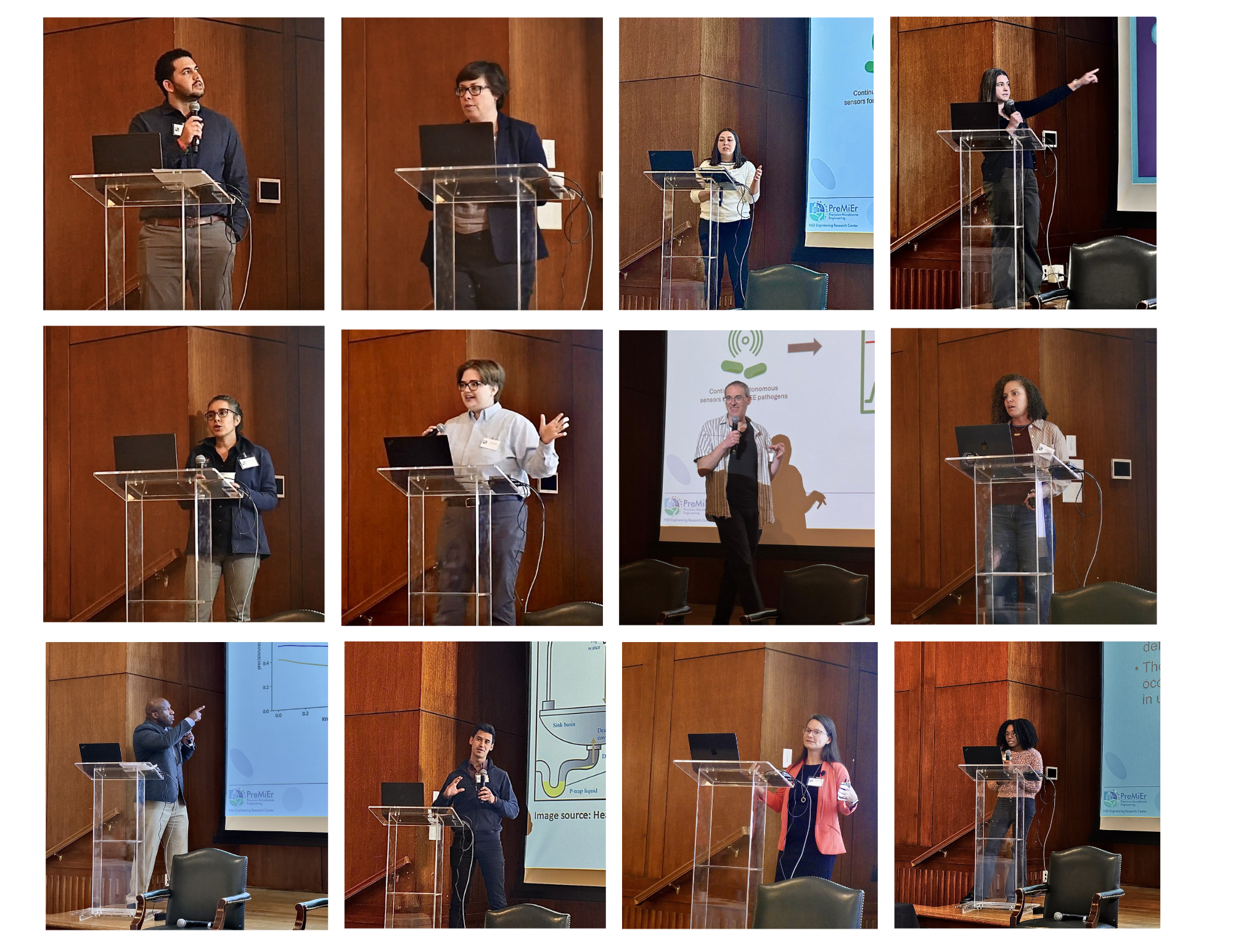
Speakers reflected on the importance of communicating microbial risks in ways that empower rather than alarm. Presenters emphasized helping the public understand when microbial signals require action, when they do not, and how interventions can be prioritized based on context.
Researchers discussing biotic inoculants highlighted the long-standing, natural dynamics of microbial ecosystems indoors. Understanding how microbial communities interact and self-regulate enables solutions that work with biological processes rather than against them.
Across sessions, presenters emphasized the importance of translating microbiome insights into guidance that everyday building operators, occupants, and community members can understand and apply.
Shaping The Regulatory Future of Indoor Microbiome
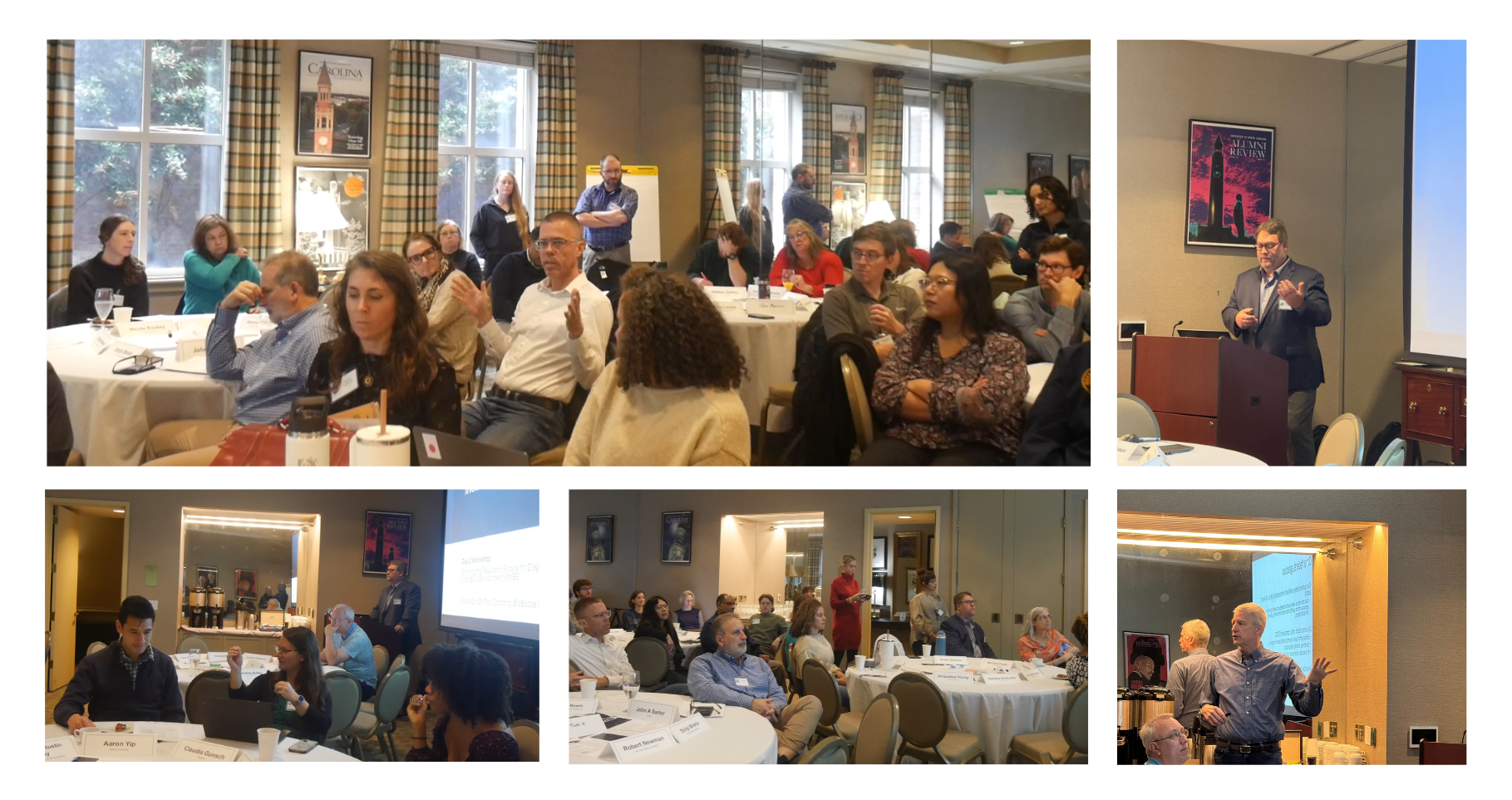
Day two focused on the regulatory and standards landscape. Workshop sessions led by Rob Donofrio examined the gap between well-established oversight for chemicals and particulates and the lack of comparable frameworks for microbial communities indoors. Donofrio summarized the urgency of this work:
| “We’ve regulated chemicals and particulates for decades. The indoor microbiome is next—and we have a chance to shape that path responsibly.”
Glenn Morrison, professor at UNC Chapel Hill, gave a keynote talk emphasizing how the various regulatory agencies/organizations at the federal, state, and local levels are working together to improve indoor air quality from the standpoint of particulate matter, VOC, and CO2 levels.
Participants then, in small groups, explored potential pathways to incorporate lessons learned in chemical and particulate regulation and apply them in indoor microbiome monitoring, risk assessment that could guide responsible deployment of microbiome-informed technologies.
These insights will inform a PreMiEr regulatory subcommittee in landscaping an emerging regulatory roadmap for the field.
A Path Forward
By the close of the summit, one message had become clear: microbiome-informed building health is rapidly moving from concept to implementation. The 2025 PreMiEr Industry & Advisory Summit reinforced PreMiEr’s role as a national leader in turning scientific discovery into practical tools, policies, and partnerships that support healthier, safer, and more resilient indoor environments.
PreMiEr thanks all participants for contributing to the momentum that will shape the next phase of innovation in the microbiome of the built environment.